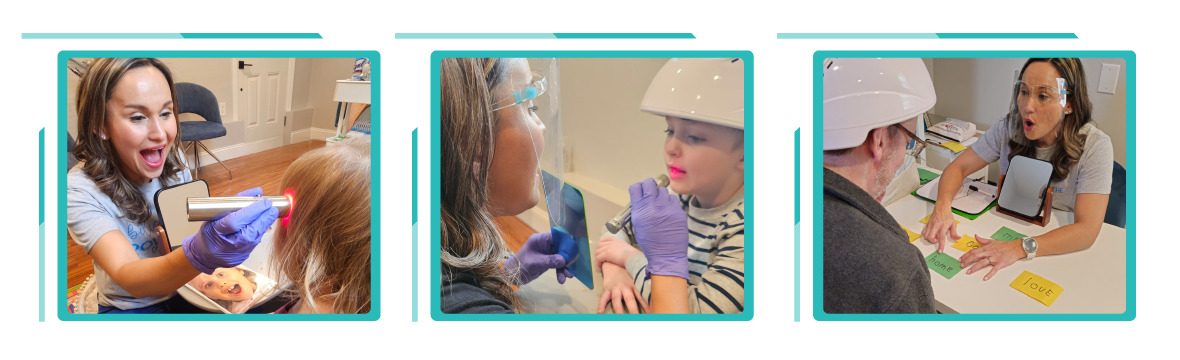

Transcranial Photobiomodulation (tPBM): Benefits for Speech & Feeding Therapy
Transcranial Photobiomodulation (tPBM) is a non-invasive, evidence-informed brain therapy that uses red and near-infrared light to stimulate cellular function, enhance neuroplasticity, and support neurological recovery. Also known as low-level laser therapy (LLLT) or near-infrared light therapy, tPBM is gaining attention as a promising adjunct treatment for stroke recovery, cognitive decline, speech disorders, and feeding therapy.
If you are searching for innovative, research-based approaches to improve communication and neurological outcomes, tPBM may be an important addition to your therapy plan.
📄 Read our published research here:
https://pmc.ncbi.nlm.nih.gov/articles/PMC10171962/
What Is Transcranial Photobiomodulation?
Transcranial Photobiomodulation (tPBM) involves applying specific wavelengths of red (600–700 nm) and near-infrared light (760–950 nm) to the scalp using LED or laser devices. The light penetrates the skull and is absorbed by brain tissue, where it stimulates cellular energy production.
Unlike surgical procedures or medications, tPBM:
- Is non-invasive
- Does not generate heat
- Does not require anesthesia
- Is generally well tolerated
- Can be used alongside traditional therapies
How Does tPBM Work?
tPBM works at the cellular level by stimulating the mitochondria, the “energy centers” of brain cells.
When near-infrared light is absorbed:
- ATP (cellular energy) production increases
- Blood flow improves
- Oxygen delivery to brain tissue increases
- Neuroinflammation may decrease
- Neuroplasticity is enhanced
These effects create an optimal environment for learning, recovery, and neural repair, especially when paired with active rehabilitation therapies like speech or feeding therapy.
Benefits of Transcranial Photobiomodulation
1. Cognitive & Brain Health Benefits
Research suggests tPBM may support:
- Improved attention and focus
- Enhanced memory
- Better executive function
- Increased mental clarity
- Support for age-related cognitive changes
2. Neurological Rehabilitation Support
tPBM is being studied for:
- Stroke recovery
- Traumatic brain injury (TBI)
- Aphasia
- Dysarthria
- Neurodegenerative conditions
By increasing metabolic activity in damaged or underactive brain regions, tPBM may help improve responsiveness to therapy.
Benefits of Combining tPBM with Speech Therapy
One of the most promising applications of transcranial photobiomodulation is its use alongside speech-language therapy.
In a published case report (linked above), combining tPBM with traditional speech therapy led to:
- Significant increases in speech rate
- Improved articulation and intelligibility
- Increased utterance length and complexity
- Reduced dysfluencies
- Enhanced expressive language output
Why It Works
Speech therapy relies on neuroplasticity; the brain’s ability to reorganize and form new neural connections. tPBM may enhance therapy outcomes by:
- Priming language networks for learning
- Improving metabolic support in speech-related brain regions
- Increasing neural responsiveness during therapy sessions
- Supporting recovery even in chronic cases
When tPBM is applied before and during speech therapy, it may accelerate progress compared to speech therapy alone.
Benefits of tPBM in Feeding & Swallowing Therapy
Feeding and swallowing involve complex motor coordination controlled by cortical and subcortical brain regions. tPBM may support feeding therapy by:
- Enhancing motor planning pathways
- Supporting coordination of oral-motor movements
- Improving cortical activation related to swallowing
- Reducing neurological fatigue
While research in feeding therapy is still developing, early clinical observations suggest that integrating tPBM may improve therapy efficiency and outcomes.
Is Transcranial Photobiomodulation Safe?
tPBM has demonstrated a strong safety profile in clinical research when administered appropriately.
There have been no consistent reports of adverse effects in human studies using appropriate dosing parameters.
As with any therapeutic modality, treatment should be administered by a trained professional using established protocols.
Who May Benefit from tPBM?
Transcranial Photobiomodulation may be appropriate for individuals who:
- Have experienced stroke or brain injury
- Are receiving speech therapy for aphasia or dysarthria
- Have feeding or swallowing difficulties
- Want cognitive support
- Are seeking adjunctive neurological rehabilitation options
A professional consultation can determine whether tPBM is appropriate for your specific condition.
Why Choose tPBM as an Adjunct to Speech Therapy?
Traditional speech therapy works by practicing skills. tPBM works by enhancing the brain’s ability to respond to that practice.
Together, they may:
- Accelerate measurable progress
- Improve therapy efficiency
- Support long-term neurological recovery
- Enhance patient engagement and confidence
This integrative approach represents a growing frontier in neurorehabilitation.
If you’re ready to explore innovative, evidence-informed approaches to enhance your speech or feeding therapy outcomes, contact us to schedule a consultation and learn how Transcranial Photobiomodulation may support your individualized treatment plan.
Learn More
To explore the scientific foundation behind this approach, read the full peer-reviewed publication and other research documents:
👉 https://pmc.ncbi.nlm.nih.gov/articles/PMC10171962/
👉 https://pmc.ncbi.nlm.nih.gov/articles/PMC6818490/
👉 https://pmc.ncbi.nlm.nih.gov/articles/PMC12595661/
👉 https://pmc.ncbi.nlm.nih.gov/articles/PMC5066074/